

Renee Good
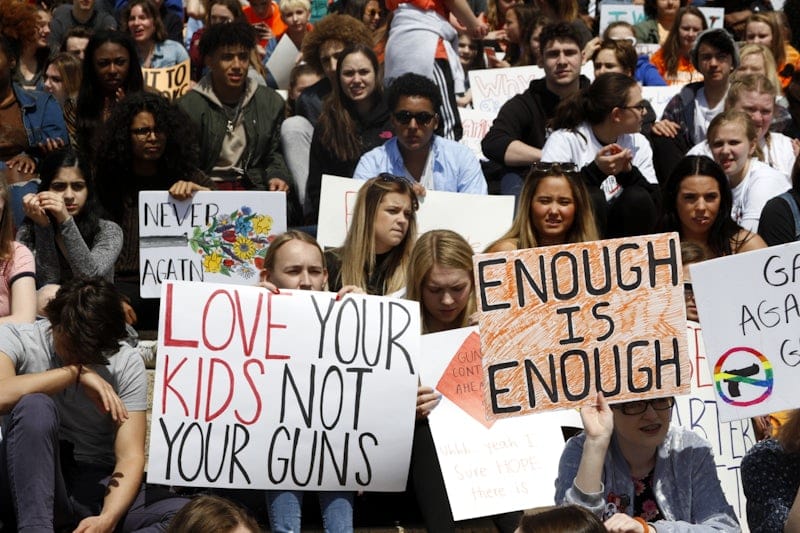
Renee Good was just like any other ordinary U.S. citizen, a 37 year old mom of three who had just recently moved to Minneapolis. Multiple accounts have stated from her family, friends, and neighbors that Good was known as a woman who was gentle, kind, and openhearted who had never been charged with anything beyond a traffic ticket. From videos that had surfaced the media by bystanders, it shows an officer approaching her car, demanding her to open the door while grabbing the handle. Refusing to comply, she pulls forward while another ICE officer stands in front of her vehicle and pulls his weapon and fires shots into the vehicle immediately (in less than 10 seconds). Immediately afterwards, Trump’s administration had framed the shooting as a form of “self defense” as the ICE agent was supposedly almost run over by Good, state and local officials and protestors rejected such statements with Minneapolis Mayor Jacob Frey saying that the “self-defense argument is ‘garbage’”. The following day, dozens of people had gathered on the street where Good was killed, blocking the streets with steel drums filled with burning wood to shield from the wintry rain. Passerbys even stopped to pay their respects at a makeshift memorial following.
Alex Pretti
On the other hand, Alex Jeffrey Pretti was a 37 year old intensive nurse who was a resident that cared deeply about the people within his community in Minneapolis. His family mentioned how “he cared about people deeply and he was very upset with what was happening in Minneapolis and throughout the United States with ICE,” as seen in his participation in protests following the January 7th fatal shooting of Good. Like Good, he had no prior criminal record other than a handful of traffic tickets. Two weeks prior to his death, Pretti’s father Michael Pretti had told Pretti to “go ahead and protest, but do not engage, do not do anything stupid, basically”. On January 24th, the Department of Homeland Security (DHS) stated that the agents had fired in self defence when Pretti, who they say carried a handgun, allegedly resisted their attempts in disarming him. However, witnesses state that he was holding a phone, not a weapon. While holding his phone, a woman is pushed over by an agent, and Pretty stands between to help her. Meanwhile, an agent sprays pepper spray in his face and wrestles him to the floor. Seconds later, about 10 gunshots were heard. In the end, the death of Pretti had sparked a civil rights investigation, the emergence of protests, and the justifications of ICE considering Pretti having the legal rights as a registered gun owner.
Justifications
Following the shooting of both Good and Pretti, the DHS and the Trump administration defended the action committed as justified, claiming that the officers in both situations had acted in self defense. In Good’s case, statements rose indicating Good was weaponizing her vehicle. On the other hand, officials justified that Pretti had used deadly force (being armed). Even then, President Trump had characterized Good as “highly disrespectful” which he claimed had contributed vastly to her shooting. Trump had even later characterized both Good and Pretti as “no angels” following both of their deaths. From his perspective, he had viewed the two individuals as “professional agitators”, where their actions could’ve well prevented the foreseeable deadly encounters.
The justifications of the deadly shootings of Renee Good and Alex Pretti are mostly centered around the claims of self-defense, threats, and the victims’ “disrespectful” behavior. However, such justifications are ultimately challenged by video evidence and commentary by legal experts. Critics argue that bystander footage of the scene shows that Good was unarmed and moving away, while Pretti was disarmed at the time and restrained before he was shot, making the lethal force by ICE agents objectively unreasonable. Additionally, officials and civil rights groups contend that filming the police or being termed as “no angels” are protected behaviors that do not legally justify execution. In the end, the actions of ICE agents are simply an unconstitutional overreach which is thereby shielded by a lack of transparency.
What does this mean?
The present legacy of Operation Metro Surge isn’t just found in official reports regarding “safety”, but rooted deeply in a $203 million economic scar and within the grieving families of Minneapolis residents Renee Good and Alex Pretti. While the DHS and the Trump administration had justified the violence of ICE agents by labelling both victims as “disrespectful” and “no angels,” the numerous bystander videos tell a story of unarmed innocent citizens and unconstitutional overreach by authority. As federal officials pull back, leaving the cases forgotten, they leave behind a city that is not only mourning, but also mobilized: while you occupy a neighborhood with force, you can not silence a community that demands for accountability and the truth.